White hat SEO
White hat SEO follows search engine and AI platform guidelines: useful content, honest markup, open crawl access and links people choose to give.
Blog · October 13, 2026
A November 24 analysis of 883,313 Bing AI citations found 58% went to support pages, PDFs, staff bios and other pages content plans ignore. A free way to find and fix your own cited pages for cheap AI traffic.
The cheapest AI traffic you can get may come from pages you published years ago and never touched again. On November 24, 2026, Jason Dodge of BlackTruck Media shared what Bing's AI cited across 26 brands, using the free AI Performance report in Bing Webmaster Tools. Of 883,313 page citations on 10,861 URLs, blog posts, product pages and homepages made up 42% combined. The other 58% went to pages most content plans ignore: support and how-to pages, instruction manuals, PDFs, app pages, course catalogs and staff directories.
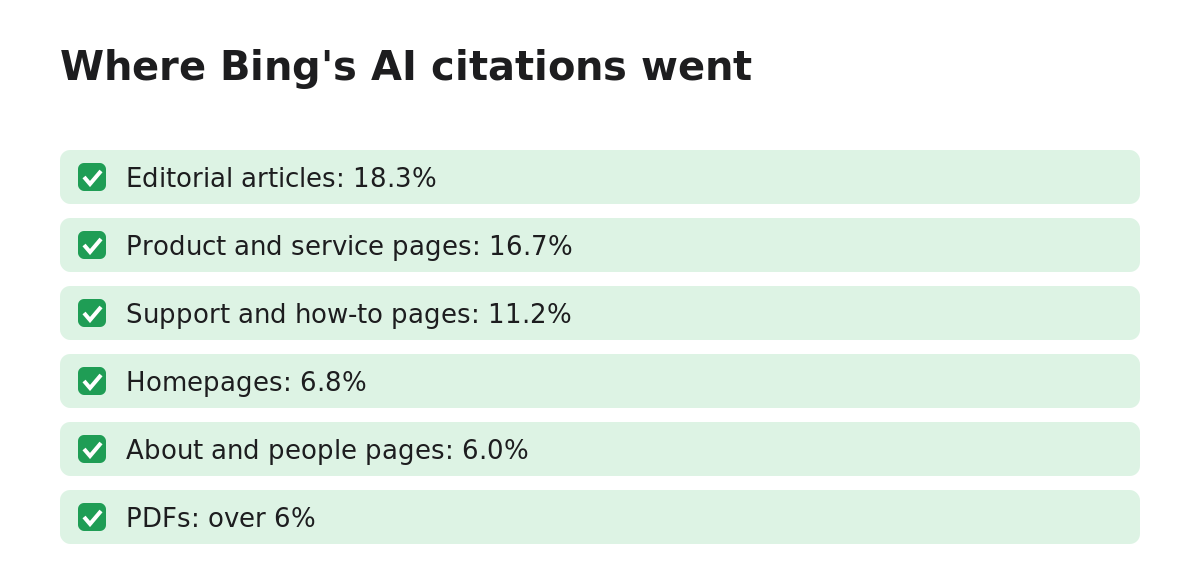
Grouped by what each page is for, editorial articles and guides drew 18.3% of the citations, product and service pages 16.7%, support, how-to and documentation pages 11.2%, homepages 6.8%, and about, people and careers pages 6.0%. PDFs made up more than 6% of all citations, and at one ecommerce brand they were 10.4%, all of them instruction manuals. The homepage was the single most cited page for 9 of the 26 brands, which the author reads as a sign that nothing deeper on those sites explained the business well enough.
Citations were also concentrated. Just over 2% of the URLs carried half of all citations, and for a typical brand the top page alone held 12.7% of its citations, with about 40 pages reaching 80%. ChatGPTKing saw a related pattern on the ChatGPT side, when answers started sending people to homepages instead of the page that earned the mention. Either way, a short list of pages is doing most of the work, and you can find out which ones they are.
This isn't a small business study. The 26 brands include tourism boards, resorts, universities, healthcare providers, manufacturers and a financial institution, and BlackTruck Media is an agency that sells this kind of work. Microsoft says the data is a sample, and the author found the query export added up to only 5% to 39% of each brand's overview total. Microsoft has also been backfilling the report, so a jump over a few months may be more data rather than more citations, and no report yet separates queries from monitoring tools from those from people. Only 37% of a typical brand's February citations came from query strings that still showed up this fall. Treat the numbers as a direction, not a forecast for your site.
One finding does carry over to a small site. On branded questions, the brands' own pages supplied 67% of the citations. On questions without the brand name, they supplied 25% and other sites supplied 75%. The questions where buyers don't know you yet are the ones where most of the answer comes from someone else.
You don't need a paid tracker to run this on your own site. Bing's AI Performance report is free once your site is verified in Bing Webmaster Tools, and Microsoft's help page for the report says it covers citations in Microsoft Copilot, Bing's AI summaries and some partner integrations. If you want to go further, BuyAISearch has a walkthrough of Bing's Topics Portfolio tab and the opportunity queries it lists for topics where other sites get cited, which is the same report one level up.
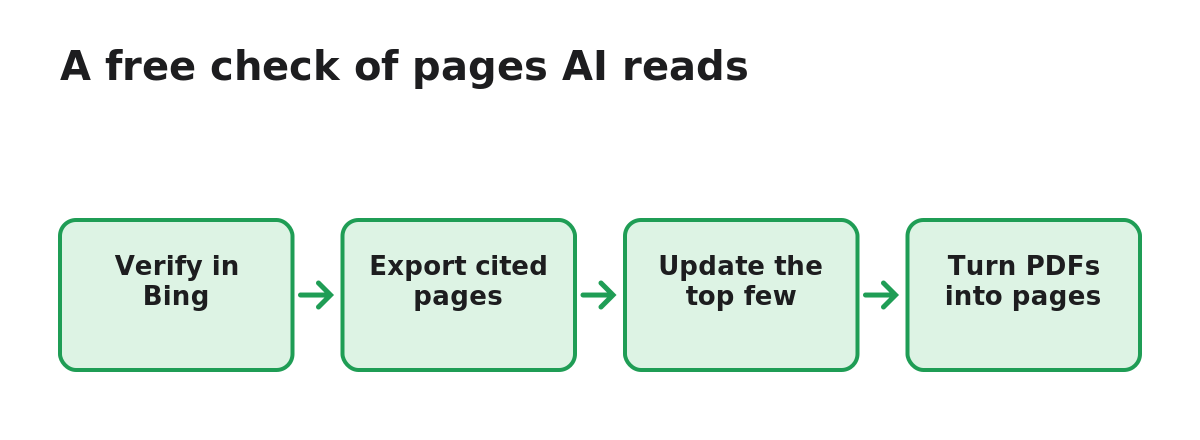
CheapAITraffic is a budget-focused AI SEO agency for small businesses, and studies like this are why we fix what you already have before we suggest anything new. Our free AI discoverability audit looks at the public pages assistants can read on your site, and we work through the free and cheap fixes first, like outdated service pages, stale staff and location details, and answers locked in PDFs. Our posts explain those fixes in plain language so you can do most of them yourself. We don't sell bot traffic, fake reviews or guaranteed placements, because no one can promise that Copilot, ChatGPT or Gemini will cite you. When a push makes sense for your budget, we run a small neetbros campaign that puts the pages you've just fixed in front of more AI agents, and we'll tell you when it isn't worth it.
Want this done for you? Start with our free AI discoverability audit. Campaigns are delivered through neetbros.
White hat SEO follows search engine and AI platform guidelines: useful content, honest markup, open crawl access and links people choose to give.
Black hat SEO tries to trick ranking systems with things like hidden text, link schemes, cloaking, fake reviews or bot traffic. It can work briefly, and it can get a site penalized or quietly ignored.
We're not black hat: no spam, no hacks, nothing that risks penalties. LLM search is still growing, and we keep up with the latest legit techniques. Stay tuned to our blog for free tips. Read the blog →